
Artificial Intelligence (AI) is no longer a technology of the future. It has already become a part of our daily lives. Whether you’re using Google Maps to find the fastest route, ChatGPT to brainstorm ideas, or Netflix to receive personalized recommendations, AI is quietly working behind the scenes.
As AI continues to evolve, it is also reshaping the world of work. Many students wonder whether AI will replace jobs entirely. The truth is more balanced than the headlines often suggest. AI is changing the way people work, creating new career opportunities while transforming existing roles.
Instead of asking, “Will AI take my job?” students should ask, “What skills should I learn to work successfully alongside AI?”
Let’s explore how AI is changing careers and the skills that will remain valuable in the coming years.
AI Is Transforming Jobs, Not Just Replacing Them
Throughout history, every major technological advancement has changed the workplace.
- The Industrial Revolution automated manual labor.
- Computers transformed office work.
- The internet created entirely new industries.
- Today, AI is reshaping almost every profession.
Rather than replacing every worker, AI is taking over repetitive, predictable, and data-heavy tasks. This allows professionals to spend more time solving problems, making decisions, and being creative.
For example:
- Doctors use AI to detect diseases faster.
- Teachers use AI tools to create personalized learning experiences.
- Software developers use AI to write and review code.
- Marketing teams use AI to analyze customer behavior.
- Financial analysts use AI to detect fraud and predict trends.
The job still exists, but the way people perform it is changing.
Industries Being Transformed by AI
Healthcare
AI helps doctors analyze medical scans, predict health risks, and improve patient care. However, patients still rely on human doctors for diagnosis, empathy, and treatment decisions.
Education
Teachers are using AI-powered tools to generate lesson plans, evaluate assignments, and personalize learning for students.
Instead of replacing teachers, AI gives them more time to focus on mentoring and student engagement.
Information Technology
Software development has changed significantly with AI coding assistants.
Developers now spend less time writing repetitive code and more time solving complex problems, designing systems, and improving software quality.
Finance
Banks use AI for fraud detection, loan approvals, investment analysis, and customer support.
Financial professionals still make strategic decisions while AI handles routine analysis.
Marketing
AI can generate content, analyze customer behavior, recommend products, and optimize advertising campaigns.
However, successful marketing still depends on creativity, storytelling, and understanding human emotions.
Manufacturing
Factories use AI-powered robots for quality control, inventory management, and predictive maintenance.
Engineers continue to oversee operations and improve manufacturing processes.
Careers That Are Growing Because of AI
AI isn’t only changing existing jobs. It is also creating entirely new career paths.
Some fast-growing roles include:
- AI Engineer
- Machine Learning Engineer
- Data Scientist
- Prompt Engineer
- AI Product Manager
- AI Ethics Specialist
- Cybersecurity Analyst
- Robotics Engineer
- Cloud Computing Engineer
- Data Analyst
Many of these careers did not exist or were extremely rare just a decade ago.
Skills AI Cannot Easily Replace
Technology continues to improve, but there are certain human abilities that remain difficult for AI to replicate.
Critical Thinking
AI can generate information quickly, but humans are responsible for evaluating whether that information is accurate, ethical, and useful.
Students who can analyze situations and make informed decisions will always be valuable.
Creativity
AI can assist with writing, designing, and generating ideas.
But originality, innovation, storytelling, and creative thinking still come from people.
Creative professionals who learn to use AI as a tool will have a significant advantage.
Communication Skills
Being able to explain ideas clearly, collaborate with teams, and present solutions confidently remains one of the most valuable workplace skills.
Strong communication becomes even more important as workplaces become more technology-driven.
Emotional Intelligence
Leadership, teamwork, negotiation, empathy, and conflict resolution require emotional understanding.
These human qualities are difficult for AI to replicate effectively.
Adaptability
Technology changes rapidly.
Students who are willing to learn continuously and adapt to new tools will stay competitive throughout their careers.
Technical Skills Students Should Start Learning
Students do not need to become AI experts overnight.
Instead, they should gradually build practical digital skills that complement their education.
Useful skills include:
- Artificial Intelligence fundamentals
- Data Analysis
- Python programming
- SQL
- Cloud Computing
- Cybersecurity basics
- Digital Marketing
- Prompt Engineering
- Excel and Power BI
- Automation tools
Learning even one or two of these skills can improve employability significantly.
How Students Can Prepare Today
The good news is that preparing for an AI-driven future doesn’t require expensive degrees or advanced research.
Here are practical steps students can start today:
1. Build Digital Skills
Take online courses and learn industry-relevant tools.
Free learning platforms such as Coursera, Google, Microsoft Learn, and LinkedIn Learning offer excellent resources.
2. Work on Real Projects
Create websites, mobile apps, dashboards, AI projects, or data analysis portfolios.
Employers value practical experience more than theoretical knowledge alone.
3. Learn How to Use AI Responsibly
Instead of fearing AI, learn how to use it effectively.
Practice using AI tools for:
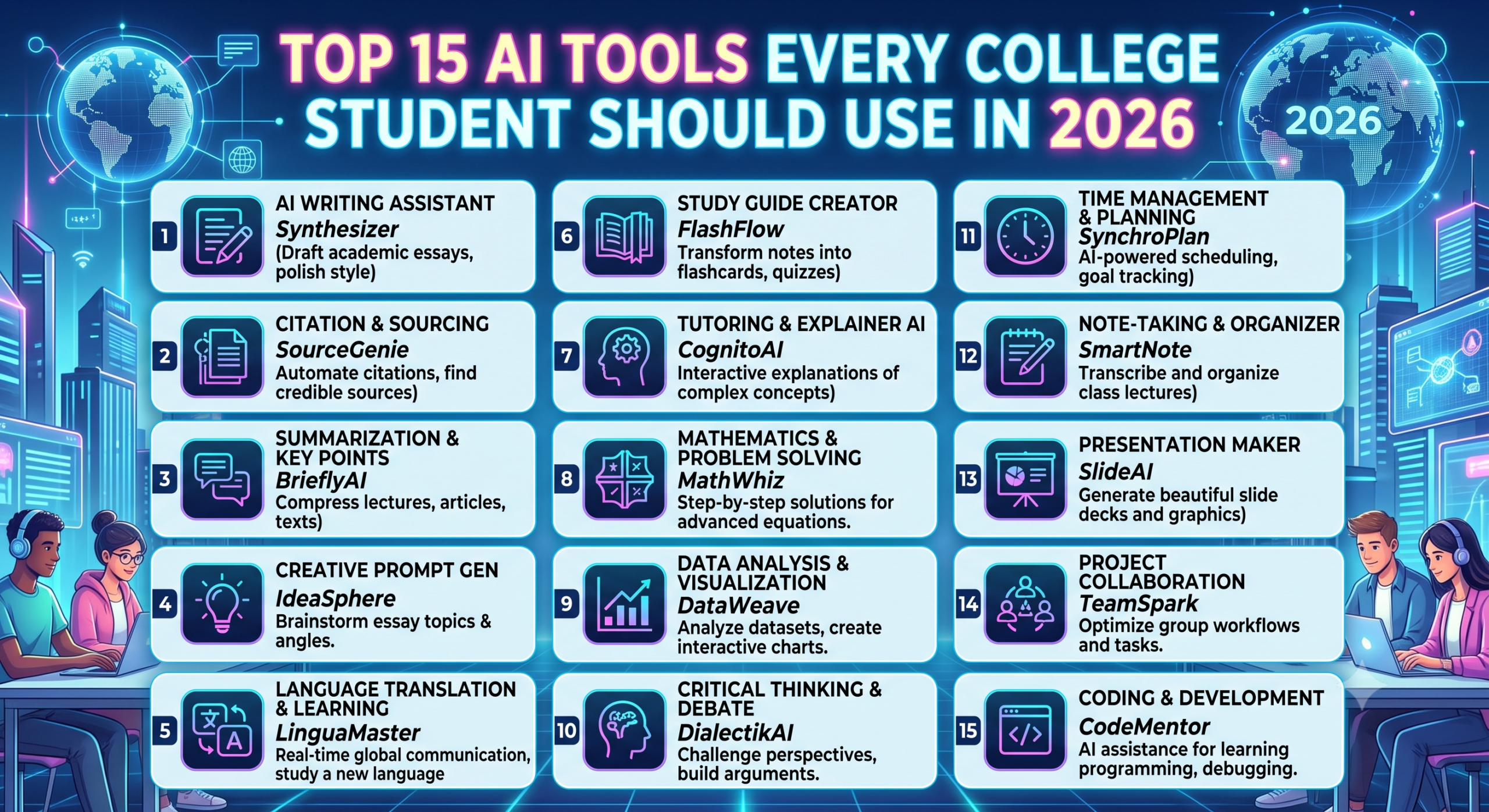
- Research
- Coding assistance
- Content creation
- Data analysis
- Brainstorming ideas
Remember, AI should enhance your thinking, not replace it.
4. Improve Soft Skills
Develop communication, leadership, teamwork, and presentation skills.
These abilities become increasingly valuable as technical tasks become automated.
5. Never Stop Learning
The most successful professionals continuously update their knowledge.
Technology evolves rapidly, and lifelong learning is becoming a necessity rather than an option.
Common Myths About AI
Myth 1: AI Will Replace Every Job
Reality: AI will automate certain tasks, but most jobs will evolve rather than disappear.
Myth 2: Only Computer Science Students Need AI Skills
Reality: AI is impacting healthcare, business, law, marketing, education, engineering, design, and many other fields.
Every student can benefit from understanding AI.
Myth 3: AI Eliminates Creativity
Reality: AI supports creativity by handling repetitive work, allowing humans to focus on innovation and original ideas.
The Future Belongs to AI-Ready Professionals
The future workplace will not simply reward those with the highest grades. It will reward those who combine technical knowledge with creativity, communication, adaptability, and continuous learning.
Students who understand how to collaborate with AI rather than compete against it will have access to more opportunities across industries.
AI is a powerful tool, but it still depends on human intelligence to guide, question, and improve its outputs.
Final Thoughts
Artificial Intelligence is changing careers faster than ever before, but it is also opening doors to exciting new possibilities. The goal is not to fear technology but to embrace it with the right mindset and skills.
By building digital literacy, strengthening soft skills, staying curious, and committing to lifelong learning, students can prepare themselves for careers that are not only future-proof but also meaningful and rewarding.
The future of work belongs to those who are ready to learn, adapt, and grow alongside technology. Start building those skills today, and you’ll be well prepared for tomorrow’s opportunities.