
India’s higher education system is undergoing significant reforms in 2026. The University Grants Commission (UGC) and the All India Council for Technical Education (AICTE) have introduced new regulations and directives aimed at improving academic quality, student safety, inclusivity, skill-based learning, and institutional accountability.
If you’re planning to take admission in a college this year or are already pursuing higher education, understanding these latest rules is essential.
In this article, we explain the major UGC and AICTE updates for 2026 in simple language.
Why Are These New Rules Important?
The new regulations are designed to:
- Improve the quality of higher education.
- Make colleges more accountable.
- Promote equal opportunities for all students.
- Increase industry-focused learning.
- Encourage digital and flexible education.
- Align Indian education with the National Education Policy (NEP) 2020.
These reforms will impact universities, engineering colleges, private institutions, faculty members, and millions of students across India.
1. New UGC Promotion of Equity Regulations 2026
One of the biggest changes introduced this year is the UGC Promotion of Equity in Higher Education Institutions Regulations, 2026.
The regulations aim to ensure that every student receives fair treatment regardless of caste, religion, gender, disability, or social background.
Key Provisions
- Mandatory Equity Committees in colleges.
- Appointment of Equity Officers.
- Stronger grievance redressal system.
- Equal Opportunity Centres.
- Time-bound investigation of discrimination complaints.
- Annual compliance reporting by institutions.
However, it’s important to note that these regulations are currently subject to legal proceedings, and the Supreme Court has stayed their implementation while the matter is being examined.
2. Greater Focus on Student Safety
Universities and colleges are now expected to strengthen campus safety through:
- Strict anti-ragging measures.
- Better surveillance systems.
- Faculty mentoring for first-year students.
- Emergency support mechanisms.
- Confidential complaint systems.
Many universities have already begun implementing stricter campus safety protocols before the new academic session.
3. Integration of SWAYAM Online Courses
UGC has instructed Higher Education Institutions to actively integrate SWAYAM MOOCs into their curriculum instead of treating them as optional resources.
Students can now:
- Earn academic credits through approved online courses.
- Learn from top IITs, IIMs, Central Universities, and other institutions.
- Access flexible learning opportunities.
- Improve employability with additional certifications.
Some colleges have also been allowed to conduct SWAYAM examinations on campus.
4. More Flexible Learning Through NEP
The 2026 framework continues implementing the National Education Policy.
Students benefit from:
- Multiple Entry and Exit options.
- Academic Bank of Credits (ABC).
- Credit transfers between institutions.
- Interdisciplinary education.
- Skill-based curriculum.
- Internship-oriented learning.
This gives students greater flexibility if they wish to pause or change their educational journey.
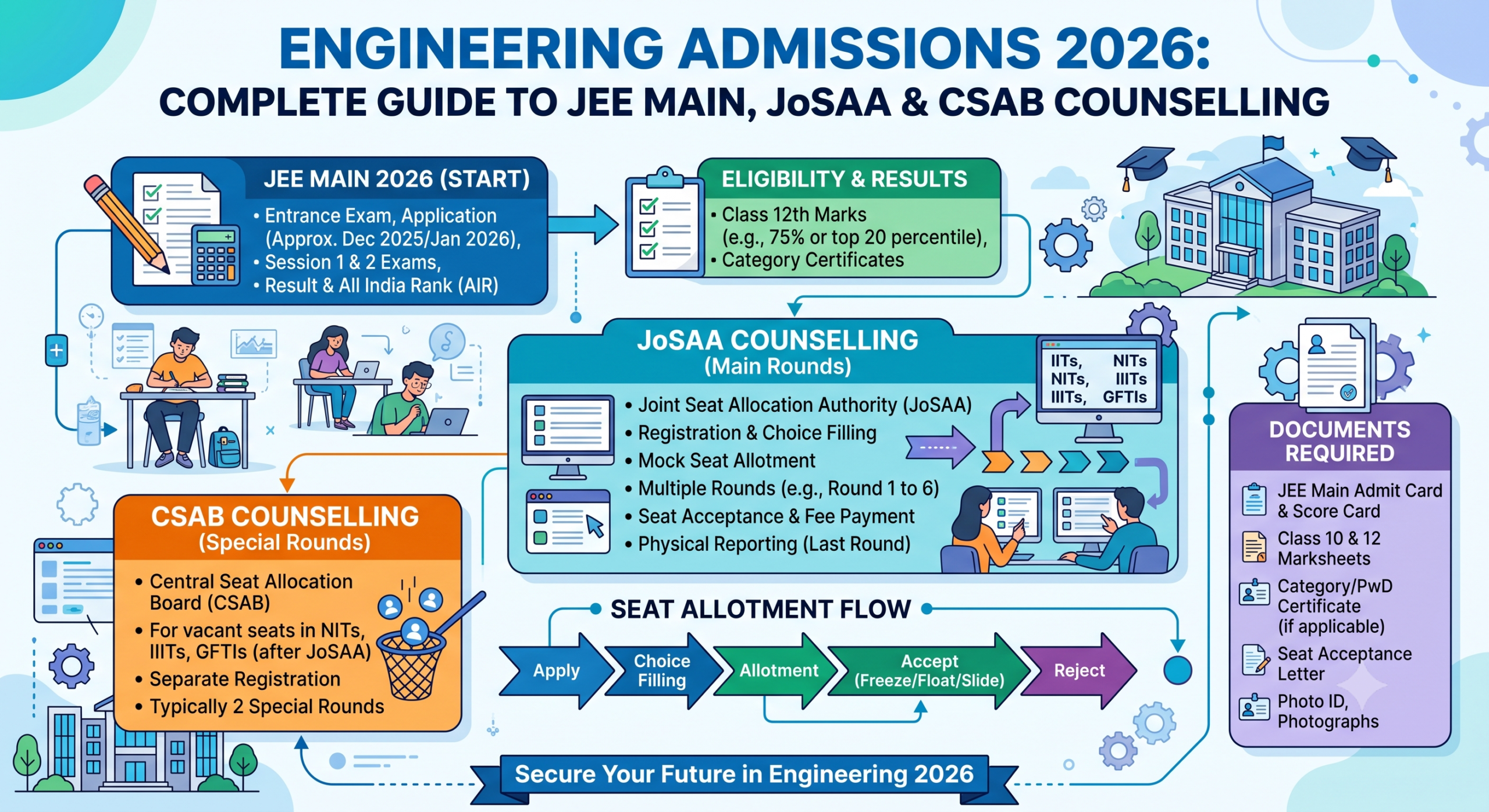
5. AICTE Strengthens Quality Standards
AICTE has increased monitoring of technical institutions.
Recent actions include:
- Closure of colleges with consistently poor performance.
- Discontinuation of hundreds of low-demand technical courses.
- Increased emphasis on qualified faculty.
- Better infrastructure requirements.
- Focus on employability and industry collaboration.
These measures aim to improve the overall quality of engineering and technical education in India.
6. Industry-Oriented Education
Colleges are being encouraged to provide:
- Industry internships
- Live projects
- Apprenticeship opportunities
- Startup incubation
- Skill certification
- Digital learning modules
Graduates are expected to be more job-ready and aligned with industry needs.
7. Increased Use of Digital Education
Digital transformation remains a priority.
Institutions are encouraged to:
- Adopt blended learning.
- Expand online teaching.
- Use Learning Management Systems (LMS).
- Offer digital assessments.
- Promote virtual laboratories where appropriate.
These initiatives improve accessibility and flexibility for students.
8. Better Transparency and Accountability
The latest regulations require colleges to maintain better documentation and governance.
Institutions must:
- Maintain proper academic records.
- Submit periodic compliance reports.
- Strengthen grievance mechanisms.
- Improve student support systems.
- Follow quality assurance standards.
This increases accountability across higher education institutions.
What Do These Changes Mean for Students?
Students can expect:
- Better learning opportunities.
- Improved campus safety.
- Flexible degree options.
- More online learning choices.
- Greater emphasis on skills.
- Stronger grievance support.
- Higher academic standards.
- Better employability.
Overall, these reforms aim to make higher education more student-centric.
What Do These Changes Mean for Colleges?
Institutions will need to:
- Upgrade infrastructure.
- Strengthen governance.
- Improve faculty quality.
- Enhance student services.
- Comply with updated UGC and AICTE regulations.
- Focus on outcomes rather than just admissions.
Failure to meet regulatory requirements may result in stricter oversight or other regulatory action depending on the applicable framework.
Frequently Asked Questions (FAQs)
Are the UGC 2026 regulations already in force?
Some UGC directives are being implemented, while the 2026 Equity Regulations have been stayed by the Supreme Court pending further proceedings. Students should follow official UGC notifications for updates.
Will these rules affect engineering colleges?
Yes. AICTE-regulated engineering and technical institutions are subject to updated quality standards, compliance requirements, and academic reforms.
Can students earn credits through online courses?
Yes. UGC is encouraging colleges to integrate approved SWAYAM courses into their academic programs, allowing eligible credits to count toward degree requirements.
Are colleges becoming more skill-focused?
Yes. Both UGC and AICTE are promoting internships, apprenticeships, industry partnerships, and practical learning to improve graduate employability.
Final Thoughts
The UGC and AICTE reforms in 2026 represent another step toward modernizing India’s higher education system. With a stronger emphasis on quality, inclusivity, digital learning, industry collaboration, and student welfare, these changes are intended to create a more flexible and future-ready academic environment.
Students should regularly check official announcements from their universities, the UGC, and AICTE, as some proposals and regulations may evolve based on judicial decisions and future notifications