
Artificial Intelligence (AI) is no longer something we only hear about in science fiction movies. It has become part of our everyday lives, influencing how we study, work, shop, travel, and communicate. From voice assistants and personalized recommendations to AI-powered chatbots and smart automation, this technology is reshaping the world around us.
One area where AI is making the biggest impact is the workplace. Businesses across industries are adopting AI to improve efficiency, automate repetitive tasks, and make better decisions. As a result, the skills employers expect from graduates are also changing.
For students, this shift presents both challenges and exciting opportunities. Those who develop the right mix of technical knowledge, creativity, and adaptability will be well-positioned for successful careers in the years ahead.
In this article, we’ll explore how AI is transforming careers and the essential skills every student should develop to stay future-ready.
Understanding the AI Revolution
Artificial Intelligence refers to computer systems that can perform tasks that usually require human intelligence. These tasks include learning from data, recognizing patterns, solving problems, understanding language, and making predictions.
Unlike traditional software that follows fixed instructions, AI systems improve over time by learning from large amounts of information. This ability allows AI to support professionals in nearly every industry.
Today, AI is being used in:
- Healthcare
- Banking and Finance
- Education
- Manufacturing
- Retail
- Agriculture
- Transportation
- Marketing
- Cybersecurity
- Software Development
As AI becomes more capable, workplaces are evolving to combine human expertise with intelligent technology.
How AI Is Changing Careers
Rather than replacing every job, AI is changing how work gets done. Routine tasks that once required hours of manual effort can now be completed within minutes.
This allows professionals to spend more time solving complex problems, serving customers, and making strategic decisions.
Here are a few examples.
Healthcare
Doctors now use AI to analyze medical images, identify diseases earlier, and recommend treatment options. While AI provides valuable insights, medical professionals still make the final decisions and provide compassionate patient care.
Education
Teachers are using AI to create lesson plans, personalize learning experiences, and automate grading for objective assessments.
This gives educators more time to mentor students and focus on meaningful classroom interactions.
Information Technology
Software developers increasingly rely on AI coding assistants that generate code, identify bugs, and suggest improvements.
Instead of replacing programmers, AI allows them to work more efficiently and focus on designing innovative solutions.
Marketing
Marketing teams use AI to analyze customer behavior, generate content ideas, optimize advertisements, and predict market trends.
Human creativity remains essential for building emotional connections with audiences.
Finance
Banks and financial institutions use AI to detect fraudulent transactions, evaluate credit risks, and automate customer support.
Financial experts continue to make important strategic and regulatory decisions.
Manufacturing
Factories use AI-powered robots to improve quality control, monitor equipment, and optimize production.
Engineers oversee these systems and solve problems that require human judgment.
Careers Growing Because of AI
AI is not only transforming existing jobs but also creating entirely new career opportunities.
Some of the fastest-growing AI-related careers include:
- AI Engineer
- Machine Learning Engineer
- Data Scientist
- Robotics Engineer
- AI Product Manager
- AI Research Scientist
- Data Analyst
- Cybersecurity Specialist
- Cloud Engineer
- Business Intelligence Analyst
- Prompt Engineer
- AI Ethics Consultant
Many organizations now look for professionals who understand both technology and business.
Essential Skills Every Student Should Develop
The future workplace will reward individuals who combine technical expertise with uniquely human abilities.
Here are the skills that will matter most.
1. Digital Literacy
Every student should understand the basics of digital technology.
This includes:
- Online collaboration tools
- Cloud platforms
- Productivity software
- Data management
- Digital communication
Digital literacy forms the foundation for learning more advanced technologies.
2. AI Literacy
Students don’t need to become AI engineers, but they should understand how AI works, where it is used, and its limitations.
Learning how to use AI tools responsibly can significantly improve productivity.
3. Critical Thinking
AI can provide answers quickly, but it cannot always determine whether information is accurate, ethical, or appropriate.
Critical thinking helps students evaluate information, solve problems, and make informed decisions.
4. Creativity
Original ideas, storytelling, innovation, and design thinking continue to be valuable human strengths.
Students who combine creativity with AI tools can produce better work in less time.
5. Communication Skills
Employers highly value professionals who can communicate ideas clearly, collaborate with teams, and present solutions confidently.
Good communication builds trust and improves teamwork.
6. Adaptability
Technology changes rapidly.
Students who are willing to learn new tools and adjust to changing workplace demands will have a significant advantage throughout their careers.
7. Data Analysis
Almost every industry now relies on data.
Learning to interpret data, identify trends, and make evidence-based decisions is becoming an essential career skill.
8. Programming Basics
Even if students do not pursue software engineering, learning programming fundamentals can improve logical thinking.
Popular beginner-friendly languages include:
- Python
- JavaScript
- SQL
These languages are widely used across multiple industries.
9. Emotional Intelligence
Leadership, empathy, teamwork, negotiation, and conflict resolution remain deeply human skills.
As AI automates technical tasks, emotional intelligence becomes even more valuable.
10. Lifelong Learning
Perhaps the most important skill is the willingness to keep learning.
Technology evolves continuously, and successful professionals regularly update their knowledge and skills.
Practical Ways Students Can Prepare
Preparing for an AI-driven future doesn’t require expensive degrees or years of experience.
Students can begin today by following these practical steps.
Learn Online
Explore courses on AI, programming, digital marketing, cloud computing, and data analytics through trusted learning platforms.
Build Real Projects
Apply your knowledge by creating websites, mobile apps, AI projects, portfolios, or data dashboards.
Practical experience helps you stand out during internships and job interviews.
Use AI as a Learning Tool
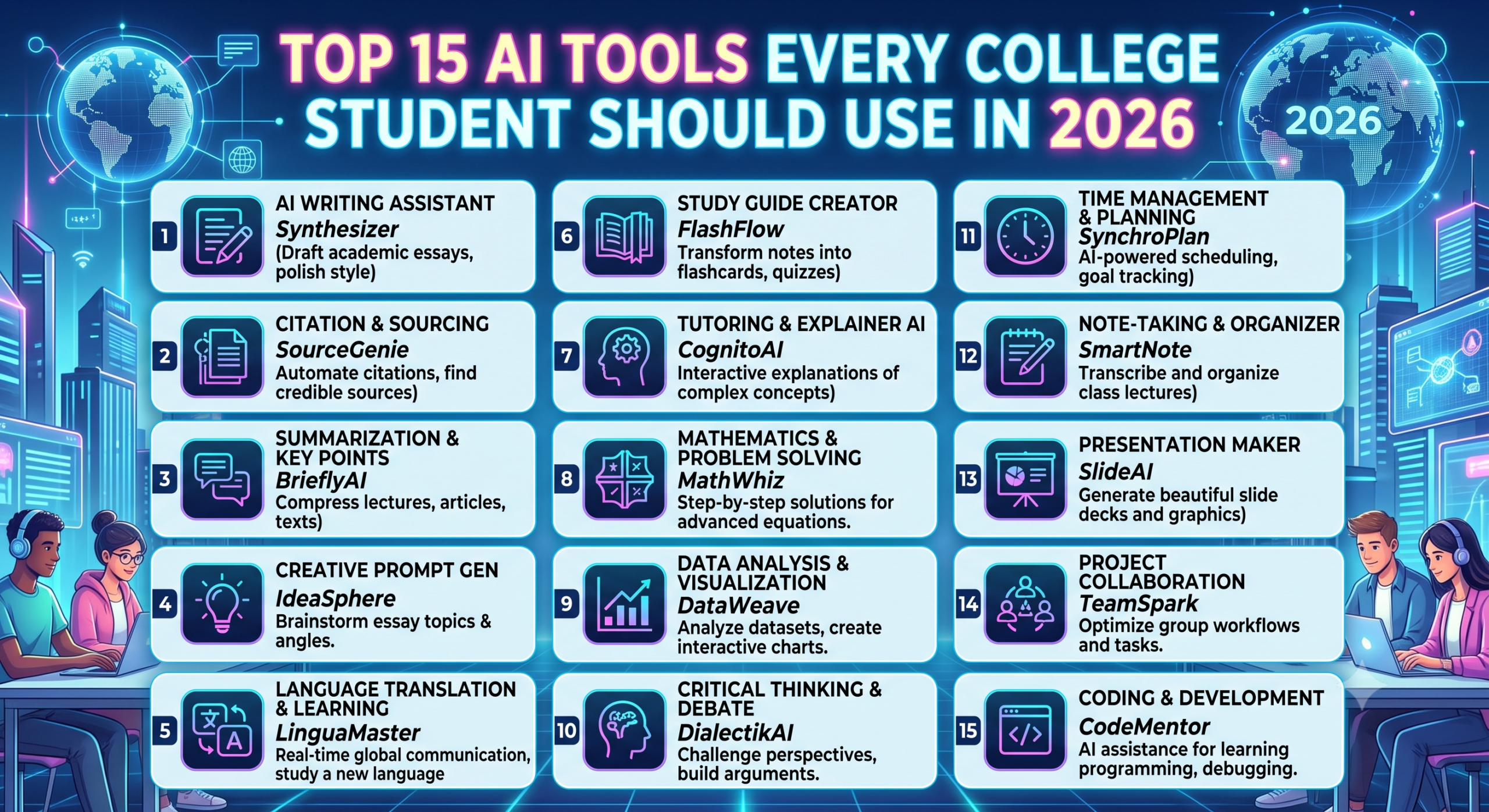
AI tools can help with:
- Brainstorming ideas
- Learning programming
- Research
- Writing drafts
- Solving practice questions
Always verify AI-generated information and use it to enhance your understanding rather than replace your own thinking.
Develop Soft Skills
Participate in presentations, debates, internships, volunteer activities, and team projects.
These experiences strengthen communication, leadership, and collaboration skills.
Stay Curious
Follow industry news, attend webinars, join student communities, and keep exploring emerging technologies.
Continuous learning is one of the strongest career advantages.
Common Misconceptions About AI
“AI Will Eliminate All Jobs”
While some repetitive roles may decline, many new jobs are being created. Most careers will evolve rather than disappear.
“Only Computer Science Students Need AI Skills”
AI is being used in medicine, business, law, agriculture, education, engineering, media, and many other fields.
Every student can benefit from understanding AI.
“AI Makes Human Skills Less Important”
In reality, creativity, empathy, communication, leadership, and ethical decision-making are becoming even more valuable because they complement AI rather than compete with it.
Looking Ahead
The future job market will reward people who can work effectively with technology while bringing uniquely human strengths to the table.
Students who embrace AI, continue learning, and build adaptable skill sets will have more career opportunities than ever before.
Instead of fearing technological change, view AI as a powerful partner that can enhance productivity, spark innovation, and open new career paths.
Conclusion
Artificial Intelligence is transforming careers across every industry, changing the way organizations operate and the skills employers seek. While AI can automate repetitive tasks, it cannot replace qualities like creativity, critical thinking, emotional intelligence, and effective communication.
For students, the future is full of possibilities. By learning digital skills, understanding AI, gaining practical experience, and committing to lifelong learning, you can build a successful and resilient career in an AI-driven world.
The future belongs to those who are willing to adapt, learn continuously, and use technology as a tool for growth. Start developing these essential skills today, and you’ll be ready to thrive in tomorrow’s workplace.