
Artificial Intelligence (AI) is changing the way we learn, work, and build careers. Tools like ChatGPT, Google Gemini, Microsoft Copilot, and Claude can write essays, generate code, solve math problems, and even create presentations in minutes.
With AI becoming more powerful every day, many students are asking the same question:
“Do I still need a college degree?”
The answer isn’t simply yes or no.
College is changing, but it is far from becoming irrelevant. In fact, students who combine a degree with practical skills and AI knowledge will have a major advantage in the future job market.
Let’s explore why.
Why Students Are Questioning College
Just a few years ago, a college degree was considered the safest path to a successful career.
Today, things look different because:
- AI can automate many routine jobs.
- Companies increasingly hire based on skills rather than degrees.
- Online courses teach job-ready skills quickly.
- Freelancing and remote work have created new opportunities.
- Many successful professionals are self-taught.
This has led students to wonder if spending three or four years in college is still worth the investment.
What AI Can Do Today
Artificial Intelligence is already capable of:
- Writing articles and reports
- Creating presentations
- Generating computer code
- Designing graphics
- Editing videos
- Answering customer queries
- Analyzing data
- Translating languages
- Automating repetitive office work
Because of these abilities, some traditional jobs are changing rapidly.
But here’s the important point:
AI replaces repetitive tasks, not human potential.
What College Still Offers That AI Can’t Replace
1. Structured Learning
College provides a roadmap for learning instead of random information from the internet.
Students build knowledge step by step under experienced faculty members.
2. Networking Opportunities
Many internships and jobs come through:
- Professors
- Alumni
- Campus placements
- Student clubs
- Industry events
These opportunities are difficult to replicate online.
3. Practical Experience
Engineering labs, business projects, research work, presentations, and group assignments teach skills that AI cannot replace.
Students learn teamwork, leadership, and communication while working with real people.
4. Credibility
Many careers still require formal degrees, including:
- Medicine
- Law
- Architecture
- Teaching
- Civil Engineering
- Government Jobs
- Research
A degree remains essential for these professions.
5. Personal Growth
College helps students become independent by teaching:
- Time management
- Critical thinking
- Public speaking
- Leadership
- Decision-making
- Problem-solving
These life skills remain valuable regardless of technological advancements.
What Has Changed in 2026
Employers no longer hire solely based on degrees.
Instead, they look for candidates who have:
- Practical skills
- Projects
- Certifications
- AI knowledge
- Communication skills
- Problem-solving ability
- Portfolio or GitHub profile
- Internship experience
A degree alone is no longer enough.
The Winning Formula
The strongest candidates combine both education and practical skills.
Degree + AI Skills + Portfolio + Experience = Better Career Opportunities
This combination gives students a significant advantage over those who rely on only one aspect.
Skills Every Student Should Learn Alongside College
Regardless of your field, these skills are becoming increasingly valuable:
AI Tools
- ChatGPT
- Google Gemini
- Microsoft Copilot
- Claude
- Perplexity AI
Digital Skills
- Excel
- Power BI
- SQL
- Python
- Data Analysis
Communication Skills
- Public speaking
- Professional writing
- Presentation skills
- English communication
Technical Skills
- Web Development
- UI/UX Design
- Cloud Computing
- Cybersecurity
- Data Science
Soft Skills
- Leadership
- Critical thinking
- Creativity
- Emotional intelligence
- Adaptability
These skills are difficult for AI to replicate and are highly valued by employers.
Careers That Still Need College
College remains essential for careers such as:
- Doctor
- Lawyer
- Chartered Accountant
- Professor
- Pharmacist
- Civil Engineer
- Mechanical Engineer
- Government Officer
- Research Scientist
Formal education is still a requirement for these professions.
Careers Where Skills Matter More
In some fields, practical ability often outweighs formal education.
Examples include:
- Web Developer
- Graphic Designer
- Digital Marketer
- Video Editor
- Content Creator
- UI/UX Designer
- Freelancer
- AI Prompt Engineer
- SEO Specialist
In these careers, a strong portfolio and demonstrated skills can be just as important as a degree.
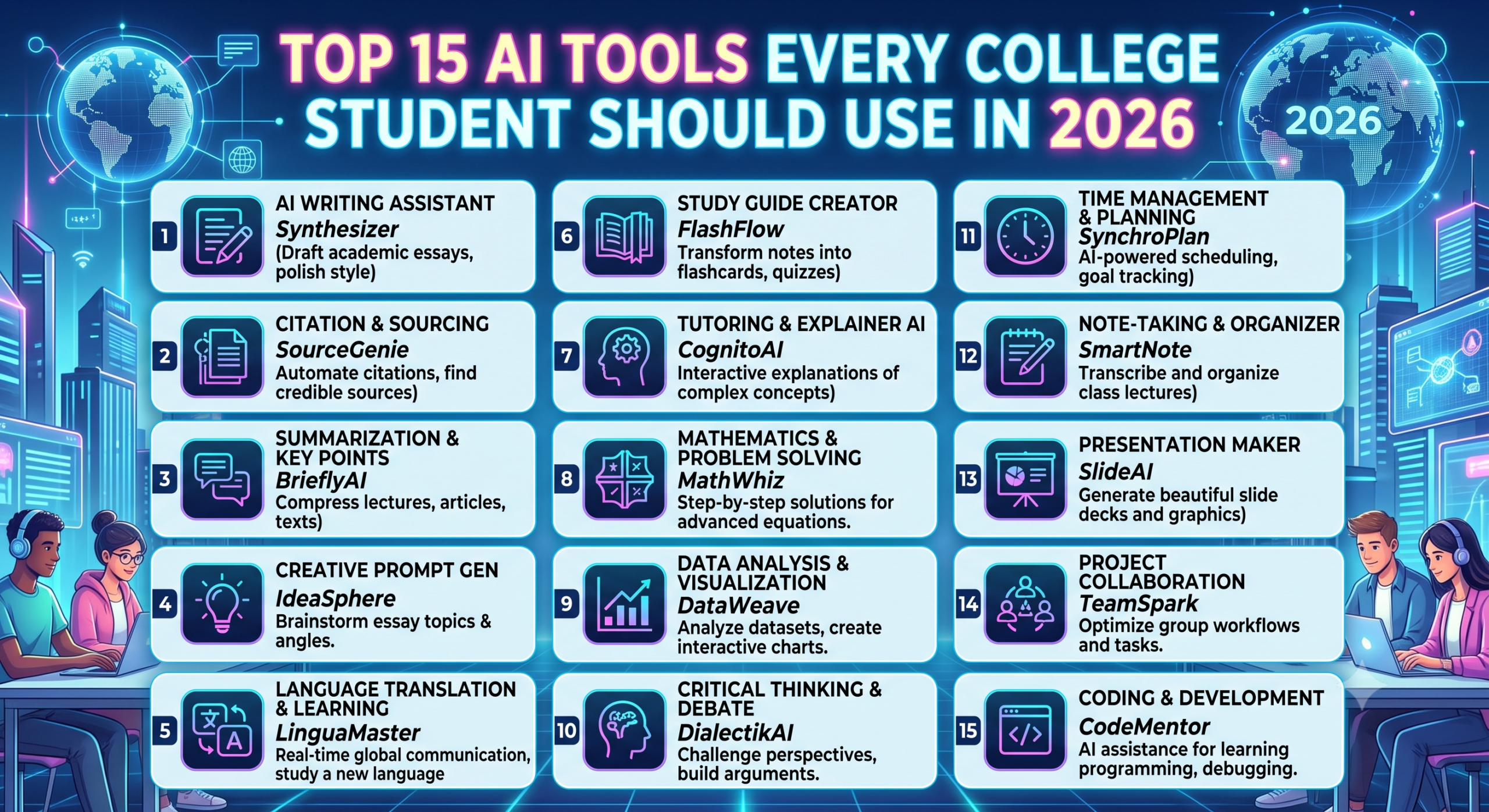
How Students Should Use AI
Instead of fearing AI, students should use it responsibly.
AI can help with:
- Understanding difficult concepts
- Creating study notes
- Practicing interview questions
- Learning programming
- Improving writing
- Summarizing textbooks
- Brainstorming project ideas
- Preparing presentations
However, avoid relying on AI to complete assignments without understanding the material. Learning remains your responsibility.
The Future Belongs to AI-Ready Graduates
The most successful graduates won’t be those with only degrees or only AI skills.
They will be those who can:
- Think critically
- Solve real-world problems
- Use AI effectively
- Work collaboratively
- Learn continuously
- Adapt to changing technologies
Employers are looking for professionals who know how to work with AI, not compete against it.
Final Thoughts
So, is college still worth it in the AI era?
Yes, but only if you make the most of it.
A college degree is no longer a guaranteed ticket to success. Instead, it provides a strong foundation. Your real advantage comes from combining that foundation with practical experience, modern digital skills, AI literacy, and a mindset of continuous learning.
Think of college as the launchpad, not the finish line. Students who embrace both education and emerging technologies will be the ones best prepared for the careers of tomorrow.
Frequently Asked Questions (FAQs)
Is a college degree still valuable in 2026?
Yes. A degree is still valuable, especially when combined with practical skills, AI knowledge, internships, and certifications.
Will AI replace college education?
No. AI is transforming how students learn, but it cannot replace the structured education, mentorship, networking, and personal development that college provides.
What skills should college students learn in the AI era?
Students should focus on AI tools, data analysis, coding, communication, problem-solving, leadership, and industry-specific technical skills.
Can I get a good job without a college degree?
Yes, in fields like web development, digital marketing, graphic design, and content creation. However, many professions still require a formal degree.
How can students prepare for AI-driven careers?
Build practical projects, earn certifications, gain internship experience, create a portfolio, and learn how to use AI tools effectively alongside your college education.