What Is the Cockroach Janta Party? Why India’s Viral Youth Movement Is Trending in 2026

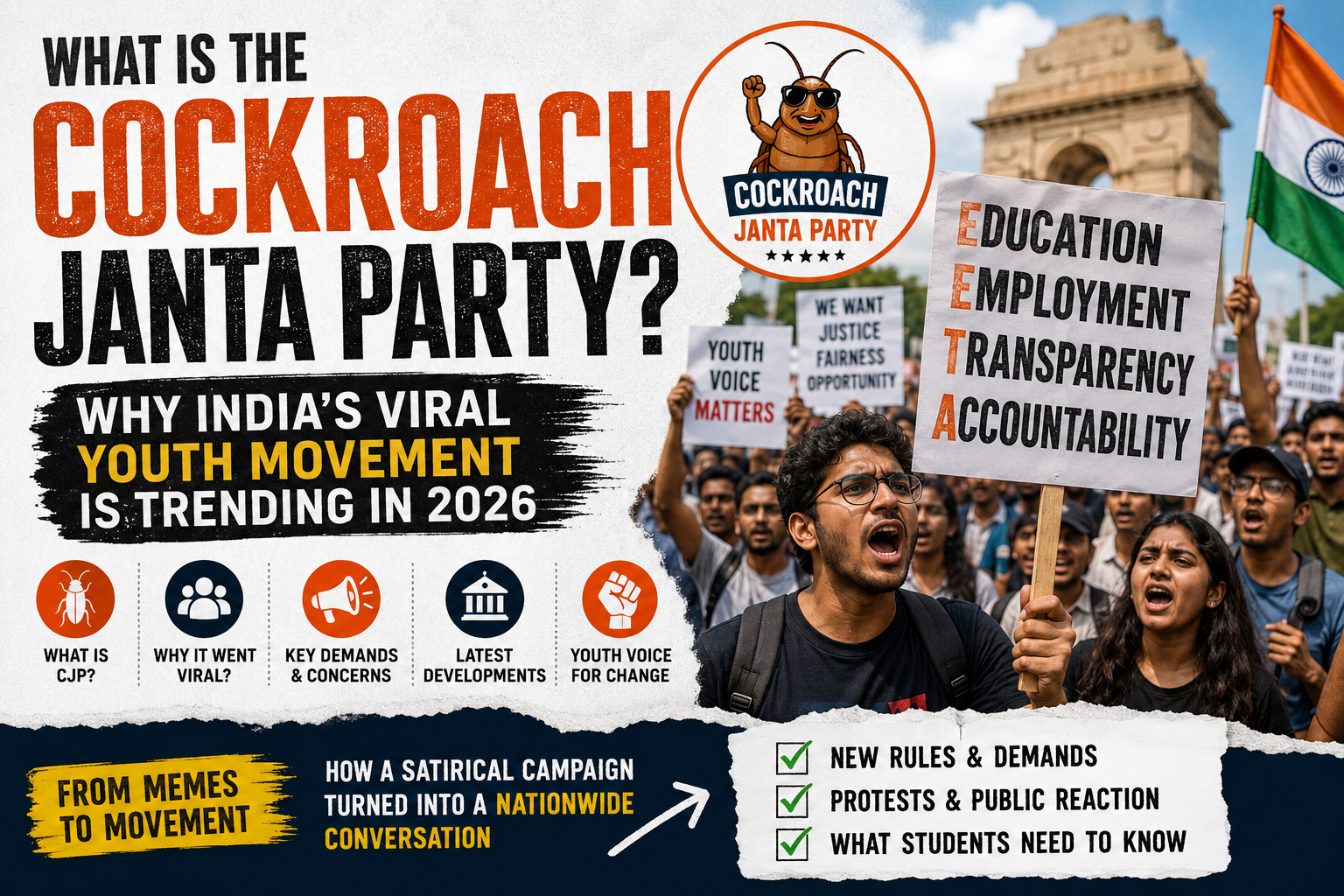
In just a few weeks, the Cockroach Janta Party (CJP) has become one of the most talked-about youth movements in India. What started as a satirical online campaign quickly transformed into a nationwide conversation, attracting millions of followers and sparking debates on education, employment, governance, and the role of young people in democracy.
Whether you have seen the name on Instagram, watched videos on YouTube, or noticed discussions on social media, many people are asking the same question: What exactly is the Cockroach Janta Party, and why is it trending?
This article explains the movement, how it started, what it represents, and why it has captured the attention of students and young professionals across the country.
What Is the Cockroach Janta Party?
The Cockroach Janta Party (CJP) is a youth-led movement that began as a satirical campaign on social media. The movement uses the cockroach as a symbol of resilience, arguing that young people continue to face challenges such as unemployment, rising living costs, and uncertainty about their future while continuing to adapt and survive.
Although it uses humour and memes, the movement also raises serious questions about education, employment opportunities, and public accountability.
Why Is It Called “Cockroach” Janta Party?
The unusual name became popular after remarks comparing unemployed young people to cockroaches triggered widespread discussion online. Supporters of the movement adopted the term as a symbol of resilience and turned it into a satirical campaign, giving rise to the name “Cockroach Janta Party.”
Instead of rejecting the label, supporters embraced it and used it to highlight issues they believe deserve greater public attention.
Why Has the Movement Gone Viral?
Several factors have contributed to its rapid growth.
1. Massive Social Media Reach
The movement gained millions of followers within days through short videos, memes, and educational content aimed primarily at Gen Z audiences.
2. Youth-Centric Issues
Many young people related to discussions around:
- Employment opportunities
- Competitive examinations
- Rising cost of living
- Education reforms
- Career uncertainty
These topics resonate with students preparing for competitive exams and recent graduates entering the job market.
3. Simple and Relatable Messaging
Unlike traditional political communication, the movement relies on humour, satire, and easy-to-understand content that spreads quickly across digital platforms.
Recent Developments
The movement has expanded beyond social media, with demonstrations and sit-in protests in New Delhi. Recent protests have focused on concerns related to national examination processes and calls for accountability in the education system.
Reports indicate that climate activist Sonam Wangchuk has also joined the protest through a hunger strike in support of some of the movement’s demands.
At the same time, public figures have clarified that they are not affiliated with the movement. For example, singer and actor Diljit Dosanjh recently stated that he is “an artist, not a politician,” distancing himself from speculation linking him to the protests.
What Are the Main Concerns Raised by Supporters?
Supporters say the movement is intended to draw attention to several issues, including:
- Examination transparency
- Recruitment processes
- Employment opportunities
- Youth participation in public discussions
- Education reforms
Different observers have different views on the movement. Some see it as an innovative form of youth activism, while others consider it largely a social media phenomenon.
Why Students Are Paying Attention
Students preparing for examinations such as NEET, JEE, CUET, SSC, UPSC, and other competitive tests have shown interest because the movement frequently discusses education-related topics, including exam administration and recruitment.
This has made education one of the central themes associated with the campaign.
Impact on Social Media
The movement demonstrates how digital platforms can rapidly amplify public conversations.
Short-form videos, memes, and discussions have helped the campaign reach audiences far beyond traditional political circles, particularly among younger internet users.
Regardless of political opinions, the campaign highlights the growing influence of social media in shaping public conversations.
Frequently Asked Questions
What is the Cockroach Janta Party?
It is a youth-led satirical movement that uses humour and social media to discuss issues such as education, employment, and public accountability.
Why is it trending?
It became widely discussed after going viral on social media and expanding into public demonstrations focused on education-related concerns.
Is it a registered political party?
The movement has been widely described as a satirical youth movement. Readers should consult official election authorities for information about political party registration.
Why are students interested?
Many students relate to discussions around competitive examinations, recruitment, and career opportunities.
Conclusion
The Cockroach Janta Party has become one of India’s most talked-about youth movements of 2026. While opinions about the movement differ, its rapid rise shows how social media can turn satire into a nationwide conversation.
For students, educators, and anyone interested in public affairs, the movement has brought renewed attention to topics such as education, employment, and youth engagement. As developments continue, it remains important to follow verified information and official announcements rather than relying solely on viral social media posts.